
Pain Points
The full archive.
Every researched opportunity published in Pain Browser. Fintech, payments, fraud, identity, compliance, and trust — one fully scored Pain Point per week, every Tuesday at 7am ET.
Pain Point #4 · Jun 2, 2026
Pain Browser No. 4: The $275M Wire That No Carrier Will Rate
What ALTA's new endorsement, the FundingShield Q1 number, and the state deed-notification wave mean for closing-side identity exposure.
The FBI just clocked $275 million in real estate fraud in 2025, a 59% jump in a year. Half of every closing in a $106 billion Q1 portfolio came up dirty. ALTA shipped a new endorsement and CertifID went horizontal. The thing nobody has shipped is the grade a carrier can write against. That is the layer.
Pain Point #3 · May 26, 2026
Pain Browser No. 3: The $17M Settlement That Priced a Stolen Childhood
What PowerSchool, the state age-verification wave, and the next certification standard mean for K-12 identity exposure.
A federal court just valued ten million tracked students at about $1.70 each. That was the easy case. The breach that exposed 62 million children's Social Security numbers has no price at all, because no market exists to set one. Build that market and you own the layer.
Pain Point #2 · May 19, 2026
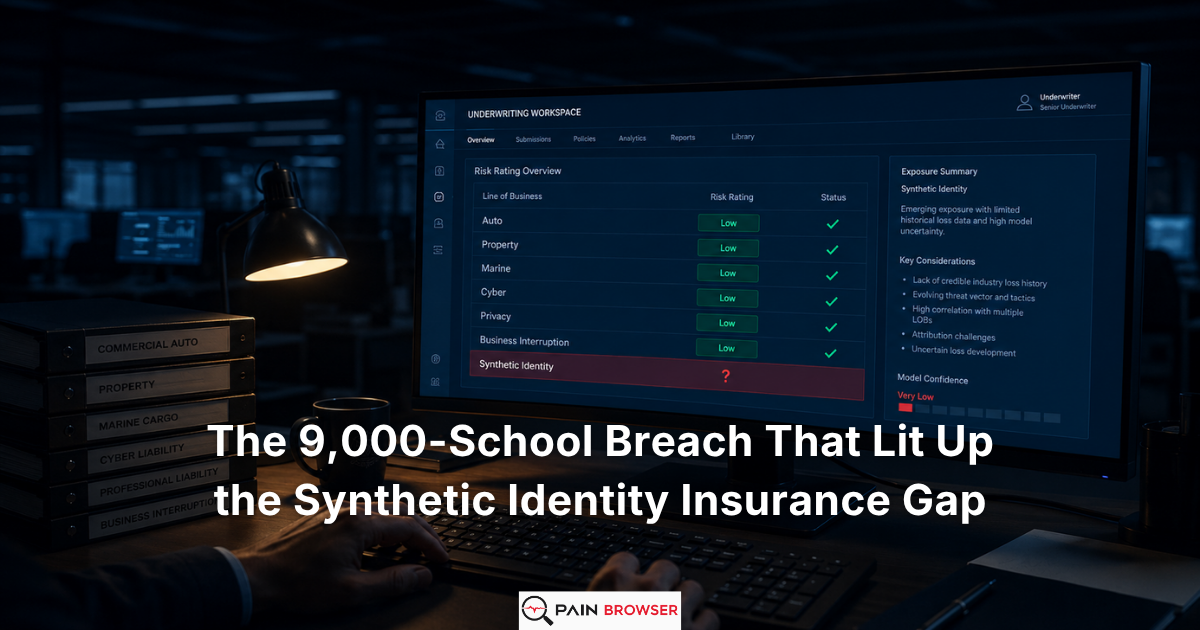
Pain Browser No. 2: The 9,000-School Breach That Lit Up the Synthetic Identity Insurance Gap
What Moody's RMS, BitSight, and the next standard-setter will do for synthetic identity exposure.
The Canvas breach forced a question cyber underwriters cannot answer: how do you price portfolio-level synthetic identity exposure when no standard exists? The first company to define one wins the rating layer.

Pain Point #1 · May 12, 2026
The $25M Deepfake Heist that Opened a Market
What Pindrop, Reality Defender, and GetReal are racing to capture.
In February 2024, a finance worker at Arup sat down to a video call with people she believed were her CFO and several colleagues. By the end of the call she had been instructed to make 15 transfers totaling HK$200 million, roughly $25 million U.S. None of the people on the call were real. Every one of them was a deepfake.
Pain Point #0 · May 4, 2026
The Agent Authentication Market That Did Not Exist 18 Months Ago
What Stripe, Visa, and OpenAI all quietly punted to the next vendor.
ChatGPT now buys things. Anthropic's Claude can use a computer. Google's Project Mariner can complete a checkout. The autonomous AI agent is not a 2027 idea anymore. As of late 2025, an agent acting on behalf of a human is initiating real wire transfers, real card-not-present purchases, and real account opens.
Pain Point #0 · May 5, 2026
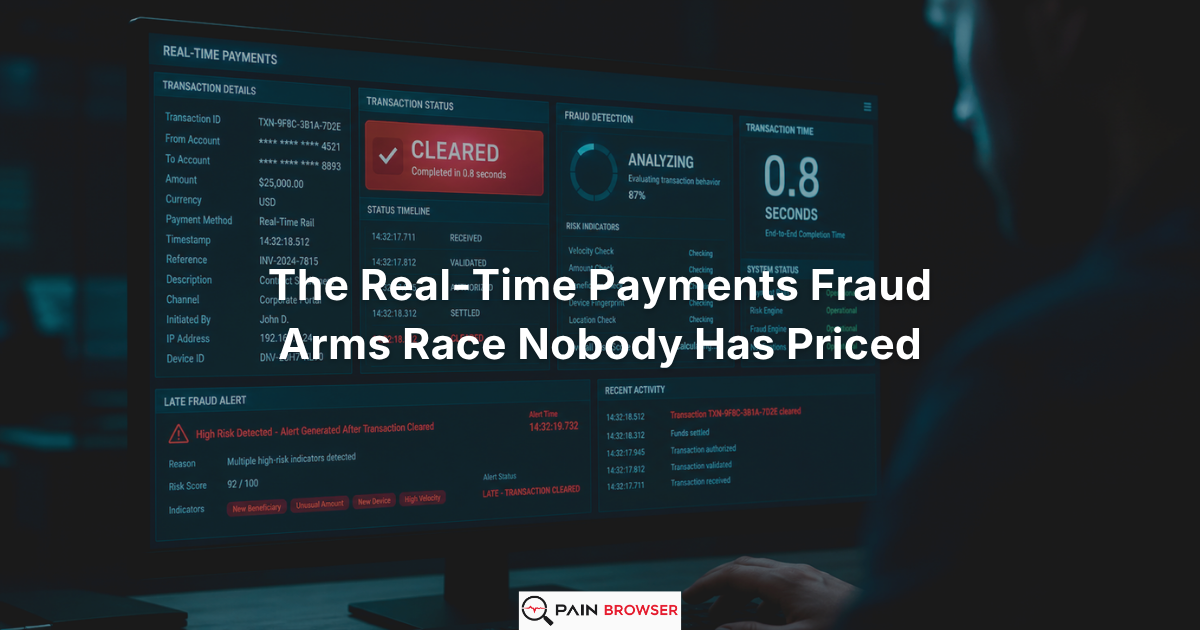
The Real-Time Payments Fraud Arms Race Nobody Has Priced
Why FedNow's 1,400 banks are running on hope and a Fed negative list.
In 2024, the Real-Time Payments network operated by The Clearing House processed 343 million transactions worth $246 billion, a 94 increase in value over the prior year. FedNow, the Federal Reserve's parallel rail launched in 2023, crossed $20 billion in payment volume in a single quarter (Q4 2024) with roughly 1,400 institutions onboard.